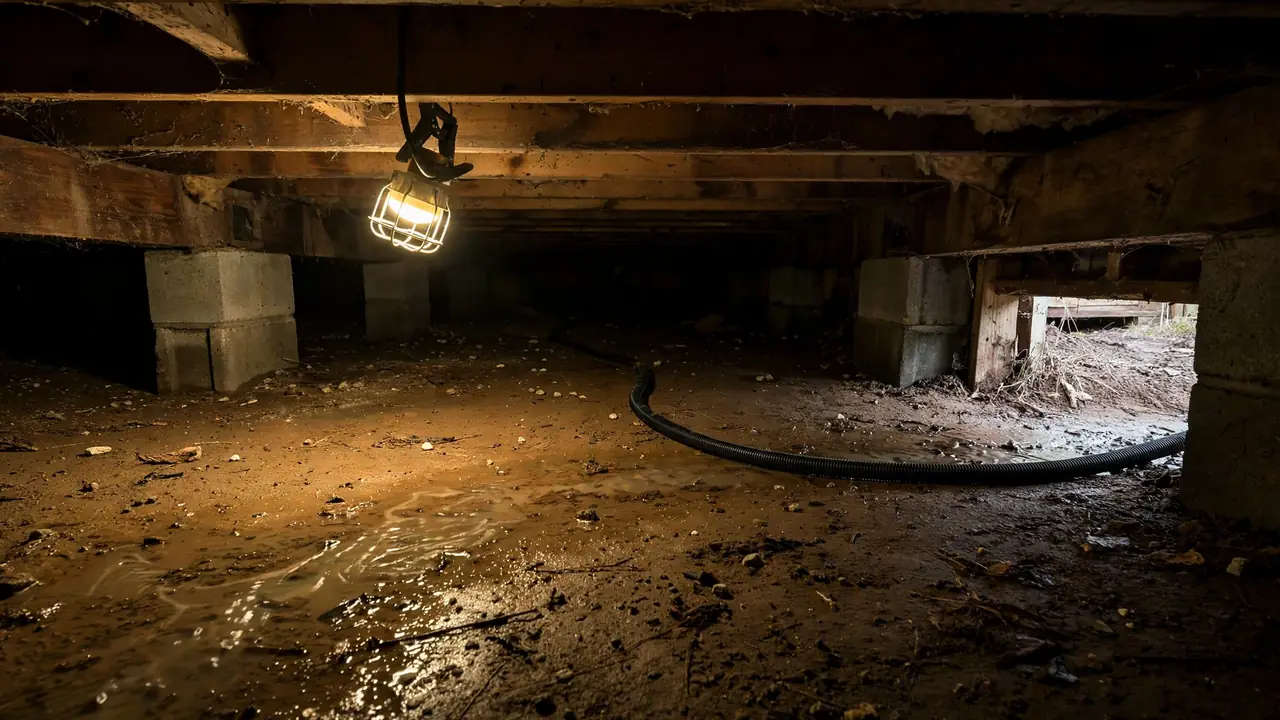
Crawl Space Water Damage Cleanup in Rocky Mount, NC
Crawl space water damage in Rocky Mount, NC is easy to miss and costly to ignore. A broken supply line, a failed water heater, storm runoff or a high water table can leave standing water under your house for days. Our crew pumps it out, removes soaked insulation, treats the soil and framing, and dries joists and subfloors until the readings prove they are dry.
Why Rocky Mount Crawl Spaces Take On Water
Most homes across Rocky Mount, Nashville, Tarboro and the rest of the Twin Counties are built over a vented crawl space. It keeps the floor off damp ground, but it also creates a place where water can sit unseen. The most common causes we find are:
- Plumbing leaks. Supply lines, drain lines and toilet flanges under bathrooms and kitchens drip or burst straight into the crawl space.
- Water heaters. Tanks in closets or the crawl space itself rust through and empty onto the ground.
- AC condensate. Clogged drain lines and sweating ductwork add gallons of water every day during a long cooling season.
- Storm runoff. Heavy summer thunderstorms and hurricane rain flow toward the house when downspouts are short or the yard slopes the wrong way.
- High groundwater. Low-lying areas near the Tar River and Stoney Creek can see water seep up from below after long rainy stretches.
- River and creek flooding. In bigger events, outside flood water fills crawl spaces completely.
- Humid air. Open vents pull in muggy outdoor air that condenses on cooler joists and ducts.
- Clay soils. Heavy clay holds water against foundation walls and drains slowly after rain.
Signs of Water Under Your Rocky Mount Home
Most people do not crawl under their homes very often, so water damage down there usually announces itself in other ways:
- A musty or earthy smell inside the house, especially when the AC kicks on
- Floors that feel soft, bouncy or spongy
- Hardwood or laminate that cups, gaps or buckles
- Vinyl flooring lifting or bubbling at the seams
- Higher humidity indoors and condensation on windows
- A jump in your water bill or the sound of running water with every faucet off
- Insulation hanging down or lying on the ground when you look through the access door
- More bugs than usual, including termite swarmers in spring
If you notice two or more of these, it is worth a look under the house.
Is Water in a Crawl Space an Emergency in Rocky Mount?
Short answer: yes, standing water in a crawl space should be treated as urgent. In Rocky Mount's warm, humid climate, wet insulation, joists and subfloor can start growing mold within 24 to 48 hours, and wood that stays wet begins to weaken. Have the water pumped out and the space dried by an experienced crew as soon as you find it.
If you have just discovered water under your house, shut off the main water if a pipe could be the cause, avoid going under the house if water is near wiring or the HVAC unit, and turn off the HVAC system if ducts are sitting in water.
Our Crawl Space Water Damage Process in Rocky Mount
Safe inspection. We check for live wiring, gas lines and HVAC equipment near the water before anyone goes under the house, then map moisture in joists, sill plates and the subfloor.
Stop the source. We locate the leak or entry point and coordinate a plumber or HVAC technician if needed.
Pump and extract. Submersible pumps and crawl space extraction tools remove standing water, even from low corners and around piers.
Remove what cannot be saved. Soaked fiberglass insulation, a torn or contaminated vapor barrier and debris are bagged and hauled out.
Clean and treat. The soil surface, piers, joists and subfloor are cleaned and treated with an antimicrobial to slow mold and odor.
Dry. Low-grain refrigerant dehumidifiers and air movers run under the house, often with foundation vents closed temporarily so humid outdoor air does not undo the work. Rooms above are dried at the same time.
Verify. We take wood moisture readings every day until joists, sill plates and subfloor reach their dry goal.
Restore. New insulation and a new vapor barrier go in, and we recommend any drainage or moisture control changes that would help.
What Happens to Rocky Mount Joists, Subfloors and Insulation When They Stay Wet
The crawl space is the structural heart of most Eastern Carolina homes, and wet wood under the house causes problems that show up upstairs.
Fiberglass insulation between the joists soaks up water, sags and holds that water directly against the subfloor. Wood that stays above roughly 19 percent moisture content is at risk of decay and mold growth, and in a warm crawl space that can happen within days. Sill plates sitting on the foundation wick moisture and can start to rot. Damp wood also attracts termites, which are already active across Nash and Edgecombe counties.
Upstairs, you may notice hardwood or laminate floors cupping, vinyl lifting at the seams, doors sticking, or a musty smell. Air from the crawl space naturally rises into the living space, so whatever is growing under the house ends up in the air your family breathes. Drying the crawl space properly protects both the structure and your indoor air.
Wet Ductwork in Rocky Mount Crawl Spaces
In most Rocky Mount homes, the heating and cooling ducts run through the crawl space. That makes them part of every crawl space water job.
In summer, cold ducts in a humid crawl space sweat. Drops of condensation fall onto insulation and the vapor barrier, and over a season they can soak an area as badly as a slow leak. If a duct is crushed, disconnected or poorly insulated, the problem gets worse.
When standing water or flood water reaches the ducts, the inside of the duct can become contaminated. Running the system then blows damp, musty air into every room. If ducts were touched by water, we recommend turning the HVAC system off until they are inspected. Flex duct that was submerged is usually replaced, while metal duct can often be cleaned and sanitized. We will tell you which applies and coordinate with your HVAC company if repairs are needed.
Rocky Mount Crawl Space Water After Hurricanes and Tar River Flooding
When the Tar River or Stoney Creek leaves its banks, or a hurricane dumps several inches of rain in a day, crawl spaces in low-lying parts of Rocky Mount and the surrounding Twin Counties fill with outside water. That water carries mud, fuel, farm runoff and sewage, so it is treated as contaminated from the start.
Flood cleanup under a house means removing all soaked insulation and the old vapor barrier, shoveling or vacuuming out silt, cleaning and disinfecting the soil surface, piers and framing, and drying everything thoroughly before anything new goes back in. We also look for shifted piers, undermined footings and damaged ductwork and point out anything that needs a contractor or engineer. For homes with flood insurance, we document each step for your National Flood Insurance Program or private flood adjuster.
How to Keep Your Rocky Mount Crawl Space Dry After We Leave
Once we have dried your crawl space, a few improvements make the next storm or leak far less damaging:
- Keep gutters clean and extend downspouts well away from the foundation.
- Make sure soil slopes away from the house so rain does not run toward the vents.
- Lay a heavy vapor barrier over the soil with seams overlapped and taped.
- Consider a crawl space sump pump if water collects in a low corner after heavy rain.
- Ask about a dedicated crawl space dehumidifier or full encapsulation if humidity stays high every summer.
- Have someone check under the house for drips once or twice a year, especially under bathrooms, the kitchen and the water heater.
- Keep the AC condensate line clear so it does not dump water under the home.
For longer-term solutions after a water loss, see our crawl space moisture control page.
Mold, Rot and Termites: What a Wet Rocky Mount Crawl Space Invites
A wet crawl space is not only a mold problem. In eastern North Carolina it invites three kinds of trouble that feed on each other:
- Mold and mildew on joists, sill plates and the underside of the subfloor, often within days in summer
- Wood rot, which softens joists and subfloor and can lead to sagging floors over time
- Subterranean termites, common across North Carolina, which are drawn to damp soil and wet wood
- Higher indoor humidity, because air from the crawl space rises into the living space
- Rusting ductwork, failing insulation and higher cooling bills
Drying the crawl space quickly is the cheapest protection against all three. Water Damage Rocky Mount documents what we find under the house so you can share it with a pest control company if needed. subfloor and joist drying
Related Crawl Space and Water Damage Services in Rocky Mount
- Crawl Space Moisture Control After Water Damage
- Subfloor & Floor Joist Drying
- Mold Remediation in Rocky Mount
- AC & HVAC Water Damage
- Burst Pipe & Plumbing Leak Cleanup
- Flood Damage Restoration
Crawl Space Water Damage in Rocky Mount, NC at a Glance
Short answer: water in a Rocky Mount crawl space should be pumped out quickly, wet insulation removed, and the joists, sill plates and subfloor dried with dehumidifiers built for crawl spaces. Left alone in Eastern Carolina humidity, it leads to mold, rot and termites.
- Common sources: plumbing leaks, AC condensate, groundwater after storms and blocked foundation drainage.
- Signs: musty smells, cupping floors, sagging insulation and high indoor humidity.
- What goes: soaked insulation and torn vapor barrier.
- What stays: framing and subfloor, once dried and treated.
- Drying time: often several days because outdoor air keeps feeding moisture in.
Water Damage Rocky Mount dries crawl spaces from below and floors from above at the same time. For long-term fixes, see our crawl space moisture control page.
Crawl Space Water Damage FAQs for Rocky Mount, NC
The crawl space questions Rocky Mount homeowners ask us most.
How long does it take to dry a wet crawl space in Rocky Mount?
Most crawl spaces dry in three to seven days once standing water and wet insulation are removed and dehumidifiers are running with the vents closed. Heavy clay soil, flood mud or a very humid week can stretch that out. We take daily wood moisture readings on joists, sill plates and subfloor so you know exactly where things stand.
Should I open or close my crawl space vents after water damage?
While we are drying, we usually close the foundation vents temporarily. On humid Rocky Mount days, open vents let in more moisture than they let out. Once the space is dry, we will talk through whether vents, a sealed vapor barrier or a dedicated dehumidifier makes the most sense long term.
Does homeowners insurance cover water in my crawl space in North Carolina?
It depends on where the water came from. A sudden plumbing or water heater failure is commonly covered. Groundwater, surface runoff and river flooding usually are not covered by a standard homeowners policy and may fall under flood insurance instead. Long-term seepage or humidity problems are often excluded. Ask your agent, and we will document the source and damage clearly.
Can I just put a fan under the house to dry it out?
A fan alone usually makes things worse in summer. It pulls more humid outdoor air across cool wood, which can raise moisture levels instead of lowering them. Drying a crawl space takes water removal first, then dehumidification with the space closed off from outside air.
Do you replace the vapor barrier and insulation after crawl space water damage?
Yes. Once the crawl space is clean and dry, we can install new insulation where needed and lay a new vapor barrier with sealed seams. If you are considering full encapsulation, we will explain the options so you can decide what fits your home.
Get the Water Out From Under Your Rocky Mount Home Today
Water under the house does not dry on its own in Eastern Carolina humidity. Every day it sits, joists, subfloor and insulation get closer to rot and mold. Our Rocky Mount crew can be under your home today.
Most homes in Rocky Mount sit on brick piers or block foundations over a vented crawl space. Low lots near the Tar River and Stoney Creek collect groundwater after big rains, and long, humid eastern North Carolina summers keep the air under the house damp. Water Damage Rocky Mount pumps out standing water, removes soaked insulation and vapor barrier, and dries the joists and sill plates before rot or mold sets in.
Water Damage Rocky Mount serves Rocky Mount 27801, 27803, 27804, Nashville, Tarboro, Sharpsburg, Spring Hope and the rest of the Twin Counties.