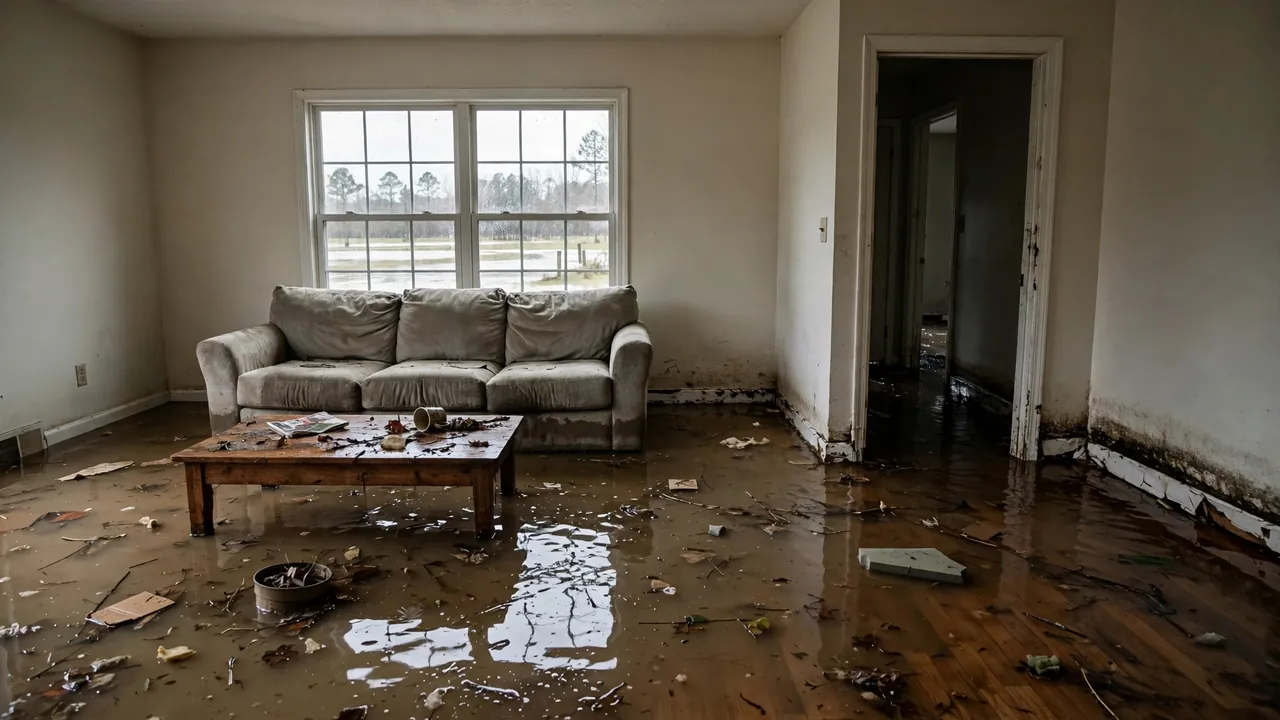
Flood Damage Restoration in Rocky Mount, NC
Flood damage restoration in Rocky Mount, NC means dealing with water that came from outside: the Tar River, Stoney Creek, a flash flood on a city street or hurricane rain that overwhelmed the ground. That water carries mud, fuel and sewage, so our crew treats it as contaminated from the start, removes what cannot be cleaned, sanitizes and dries your home or business completely.
Rocky Mount's Flood History and Why It Still Matters
Few cities in North Carolina know flooding the way Rocky Mount does. In September 1999, Hurricane Floyd dropped heavy rain on ground already soaked by Hurricane Dennis. The Tar River crested at a record 32.35 feet in Rocky Mount on September 17, and about 2,000 homes in the city were damaged by flooding. Neighborhoods such as Brookview flooded as creeks feeding the Tar River overflowed.
The river has risen again since. Hurricane Matthew pushed it to 28.73 feet in October 2016, and heavy spring rain in April 2017 sent it well over flood stage again, closing roads and pushing water into low-lying areas east of town. Because the Tar River drains a large area upstream, it often crests in Rocky Mount days after the rain stops, which means flood water can keep rising while the sun is out.
That history matters for restoration today. Many homes near the river and its creeks have flooded more than once, older repairs may have hidden damage, and a lot of houses sit on crawl spaces where flood water lingers out of sight. A careful flood cleanup looks at all of it, not just the rooms you can see.
Is Flood Water in Rocky Mount Dangerous?
Short answer: yes. River, creek and street flood water is classified as Category 3, or black water, because it carries sewage, bacteria, fuel, pesticides and debris. Anything porous it soaks, like carpet, drywall and insulation, is usually removed, and every hard surface must be cleaned and disinfected before drying. Keep children and pets out, and wear boots and gloves if you must go in.
Our Flood Damage Restoration Process in Rocky Mount
Safety and access. We confirm power is off or safe, check for structural damage and gas issues, and set up a safe path into the home.
Document everything. Photos of the water line, damaged materials and belongings are taken before cleanup begins.
Mud-out and water removal. Pumps and extractors remove remaining water, and silt and mud are shoveled and vacuumed out of rooms and the crawl space.
Remove contaminated materials. Carpet, pad, drywall, insulation and other porous materials that touched flood water are removed to a clean line above the wicking height.
Clean and disinfect. Framing, subfloor, slab, crawl space soil and all hard surfaces are cleaned and treated with antimicrobial products.
Dry the structure. Commercial dehumidifiers and air movers run inside and under the house, with daily wood and air readings.
Verify and rebuild. Once framing and subfloor reach their dry goal, we rebuild walls, floors, insulation and finishes.
Returning Home Safely After a Flood in Rocky Mount
- Wait until local officials say it is safe to return to your neighborhood.
- Do not enter if water is still inside or if you see sagging ceilings, shifted walls or foundation damage.
- Keep the main breaker off until an electrician checks any panel or outlets that were under water.
- If you smell gas, leave right away and call the gas company from outside.
- Watch for snakes, fire ants and other animals that moved in with the water.
- Wear rubber boots, waterproof gloves and an N95 mask when handling anything flood water touched.
- Photograph every room, the water line on the walls and damaged belongings before you move anything.
- Run generators only outdoors, far from doors and windows.
- Throw out food, medicine and cosmetics that flood water touched.
What Can Be Saved After Flood Water Gets Into a Rocky Mount Home
- Concrete, brick, tile, metal and solid wood framing: cleaned, disinfected and dried in place.
- Drywall and wall insulation: removed to a clean line above the water mark.
- Carpet and pad: removed and discarded.
- Hardwood and laminate flooring: usually removed if submerged; subfloor dried and checked.
- Cabinets: solid wood boxes may be saved; particleboard swells and is replaced.
- Crawl space insulation and vapor barrier: removed and replaced after drying.
- Upholstered furniture and mattresses: usually not salvageable after contaminated water.
- Photos, documents and keepsakes: freeze or air-dry quickly; some can be professionally restored.
- HVAC ducts that were submerged: flex duct replaced, metal duct cleaned or replaced, system inspected before running.
We photograph and list everything we remove so nothing is missed on your claim.
Flash Flooding and Street Flooding in Rocky Mount
You do not have to live beside the river to flood. Summer thunderstorms can drop several inches of rain in an hour or two, and Rocky Mount's creeks and storm drains fill fast. During past events, roads and parking lots around Sunset Avenue and Buck Leonard Boulevard disappeared under water, and roads east of the city such as Leggett Road, Cox Avenue and Gay Road have been closed by flooding.
Flash flood water often enters through doorways, garages, crawl space vents and low windows. It may only be a few inches deep and gone in a few hours, but it leaves behind mud and contamination in the crawl space and on floors. These smaller floods deserve the same careful cleanup as a major river flood, because the mold and odor problems that follow are just as real.
Flood Insurance and FEMA Help in Rocky Mount, Nash and Edgecombe Counties
A standard homeowners policy in North Carolina generally does not cover flooding from rivers, creeks or surface water. That coverage usually comes from a separate flood policy, most often through the National Flood Insurance Program, and new NFIP policies typically have a waiting period before they take effect, so it pays to buy before storm season. When a major disaster is declared for Nash or Edgecombe County, FEMA assistance may also be available to help with essential repairs for eligible households.
Whichever path applies to you, good documentation speeds things up. We photograph the water line in every room, record moisture readings, list every material removed and keep samples when an adjuster asks. If your home sits near the Tar River or Stoney Creek and you do not yet have flood coverage, it is worth a conversation with your agent before the next hurricane season.
Before You Go Back In After a Rocky Mount Flood
After the Tar River or Stoney Creek goes down, the urge is to get inside and start cleaning. A few safety steps come first:
- Wait until local officials say your street is safe to return to
- Do not turn the power back on yourself if water reached outlets or the panel; Rocky Mount Public Utilities or an electrician should check it
- If you smell gas, leave and call from outside
- Wear boots, gloves and an N95 mask, and keep children and pets out
- Photograph the water line on walls, the crawl space and every damaged item before moving anything
- Call your flood insurance carrier and get a claim number
- Assume anything the floodwater touched is contaminated
Once it is safe, call (252) 358-2834. Water Damage Rocky Mount can start the mud-out and drying while you work on the claim. water damage insurance claim help
Related Flood Recovery Services in Rocky Mount
- Hurricane & Storm Water Damage
- Crawl Space Water Damage Cleanup
- Sewage & Septic Backup Cleanup
- Mold Remediation
- Contents Pack-Out & Cleaning
- Water Damage Insurance Claim Help
Flood Damage Restoration in Rocky Mount, NC at a Glance
Short answer: floodwater from the Tar River, Stoney Creek or flash flooding is contaminated. Restoration means removing mud and soaked porous materials, cleaning and sanitizing everything it touched, and drying the structure, including the crawl space, before rebuilding.
- Before re-entry: wait for officials, then check for gas smells and structural damage.
- Electrical: Rocky Mount Public Utilities or an electrician should clear power before it is restored.
- What usually goes: carpet, pad, drywall and insulation below the flood line.
- Insurance: river and surface flooding usually needs a separate flood policy.
- Local history: Hurricane Floyd in 1999 and Matthew in 2016 both flooded large parts of the city.
Water Damage Rocky Mount works through flood cleanup room by room. For claim steps, see our water damage insurance claim help page.
Flood Damage FAQs for Rocky Mount, NC
Answers to what Twin Counties homeowners ask most after high water.
How soon does mold grow after a flood in Rocky Mount?
In Rocky Mount's warm, humid climate, mold can begin growing on wet drywall, wood and insulation within 24 to 48 hours. After a flood, homes often sit closed up for days before owners can return, so visible growth is common. Fast removal of wet materials and aggressive drying are the best defense.
Can drywall be dried and saved after flooding?
Drywall that soaked up outside flood water is usually cut out, because it is porous and absorbs contaminants along with the water. We cut at a clean line above the highest wicking point, often a couple of feet above the water line, so the framing behind can be cleaned, disinfected and dried.
Do I need to remove all my flooring after a flood?
Not always. Carpet and pad are removed after flood water. Tile on concrete can usually be cleaned. Hardwood and laminate often have to go if they sat in contaminated water, and the subfloor beneath them must be checked and dried. We decide room by room based on readings, not guesses.
How soon can you start after flood water goes down?
As soon as officials say it is safe to return and the water has drained from your home. In a large event across the Twin Counties, demand spikes, so calling early gets you on the schedule. We can often start documentation and mud-out the same day we arrive.
Is flood water in my crawl space as serious as water inside the house?
Yes. Flood water under the house is just as contaminated as flood water inside it, and it sits right against your joists, subfloor and ductwork. The insulation and vapor barrier usually need to come out, the soil surface needs cleaning and the space needs thorough drying before new materials go in.
Start Your Rocky Mount Flood Recovery Today
After a flood, every day in humid Eastern Carolina weather lets mold and rot spread further into your home. As soon as it is safe to go back in, our Rocky Mount crew can start the mud-out, sanitizing and drying.
Rocky Mount measures floods by the Tar River. During Hurricane Floyd in 1999 the river crested at about 32 feet, roughly a quarter of the city went under water and neighboring Princeville was nearly wiped out. Hurricane Matthew brought it close to 29 feet in 2016. Water Damage Rocky Mount treats all river and creek floodwater as Category 3, removes what it touched and documents every room for flood insurance.
Water Damage Rocky Mount serves Rocky Mount, Tarboro, Princeville, Nashville, Sharpsburg, Pinetops, Battleboro and all of Nash and Edgecombe counties.